
Find and Book your local courses
City & Guilds (2377-77) PAT Testing Course
2 Days CourseClassroom
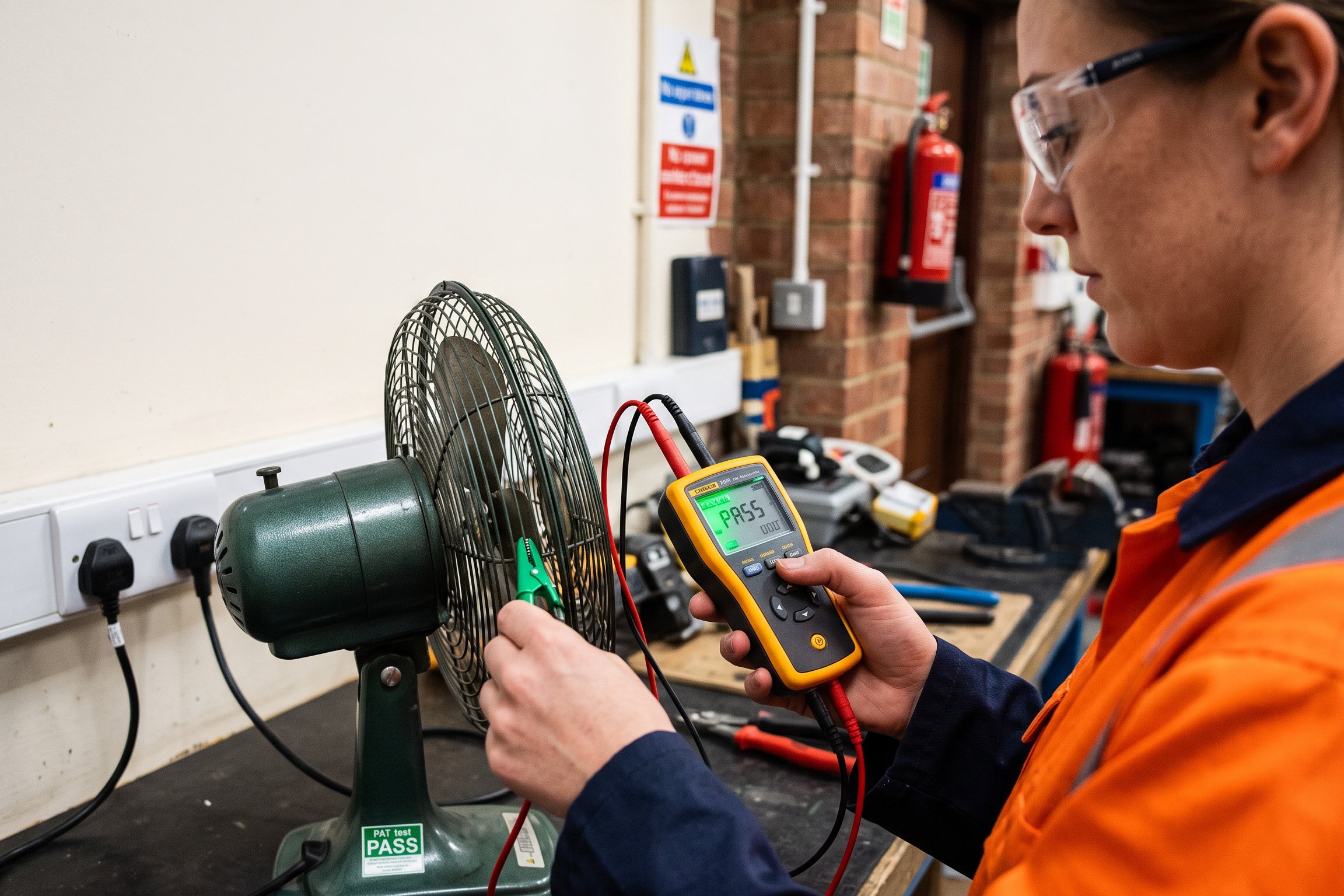
Testing electrical equipment properly takes more than a quick visual check, and the City & Guilds PAT Testing 2377-77 Course gives delegates the skills, knowledge and formal certification to carry out Electrical Equipment Testing (EET) confidently, correctly and in line with current best practice. Reflecting the broader scope of equipment now covered compared with older PAT testing standards, the course blends hands-on practical training with the underpinning theory needed to test safely and record findings in a legally defensible way.
No electrical background is required, since the course is designed to be accessible to beginners aged 18 and over, making it a solid starting point for anyone taking on this responsibility for the first time. Those with existing electrical knowledge will still find plenty of depth here, particularly around interpreting the IET Code of Practice, equipment classification, and the risk-based approach to testing frequency; electricians already holding the City & Guilds 2391-52 Level 3 Award in Initial and Periodic Inspection and Testing of Electrical Installations often add this qualification to broaden their compliance offering further.
Whether upskilling a maintenance team, taking personal responsibility for testing across a rental property portfolio, or demonstrating compliance within a wider health and safety management framework, this qualification gives a credible, nationally recognised foundation. It also pairs naturally with other electrical CPD, including the City & Guilds 18th Edition 3-Day Course (2382-26) and the City & Guilds 2921-34 Level 3 Award in the Requirements for the Design and Installation of Domestic and Small Commercial Electric Vehicle Charging Installations, for electricians building a broader specialist service offering.
Learners are encouraged to familiarise themselves with the Code of Practice before attending, particularly the contents page, glossary and index, to get more out of the day.
Loading Feefo reviews…

In-house training sessions also available
Do you have a larger workforce to train up? Enquire about our in-house training.
Frequently Asked Questions
Do I need an electrical background to do this course?
No. It's designed to be accessible to beginners aged 18 and over, though reading through the IET Code of Practice beforehand will help you get the most from the training.
What is the difference between PAT testing and EET testing?
PAT testing was the traditional term for in-service electrical equipment inspection. The City & Guilds 2377-77 update now covers a much wider range of equipment, which is why the industry increasingly uses the term Electrical Equipment Testing (EET).
How long is the City & Guilds 2377-77 certificate valid?
City & Guilds does not set a formal expiry date, but many employers and industry bodies recommend refreshing your knowledge every three to five years, or whenever the Code of Practice is updated.
Related Courses


Request a callback
Leave your contact details below and we’ll call you back as soon as one of our team becomes available.