.webp)
Find and Book your local courses
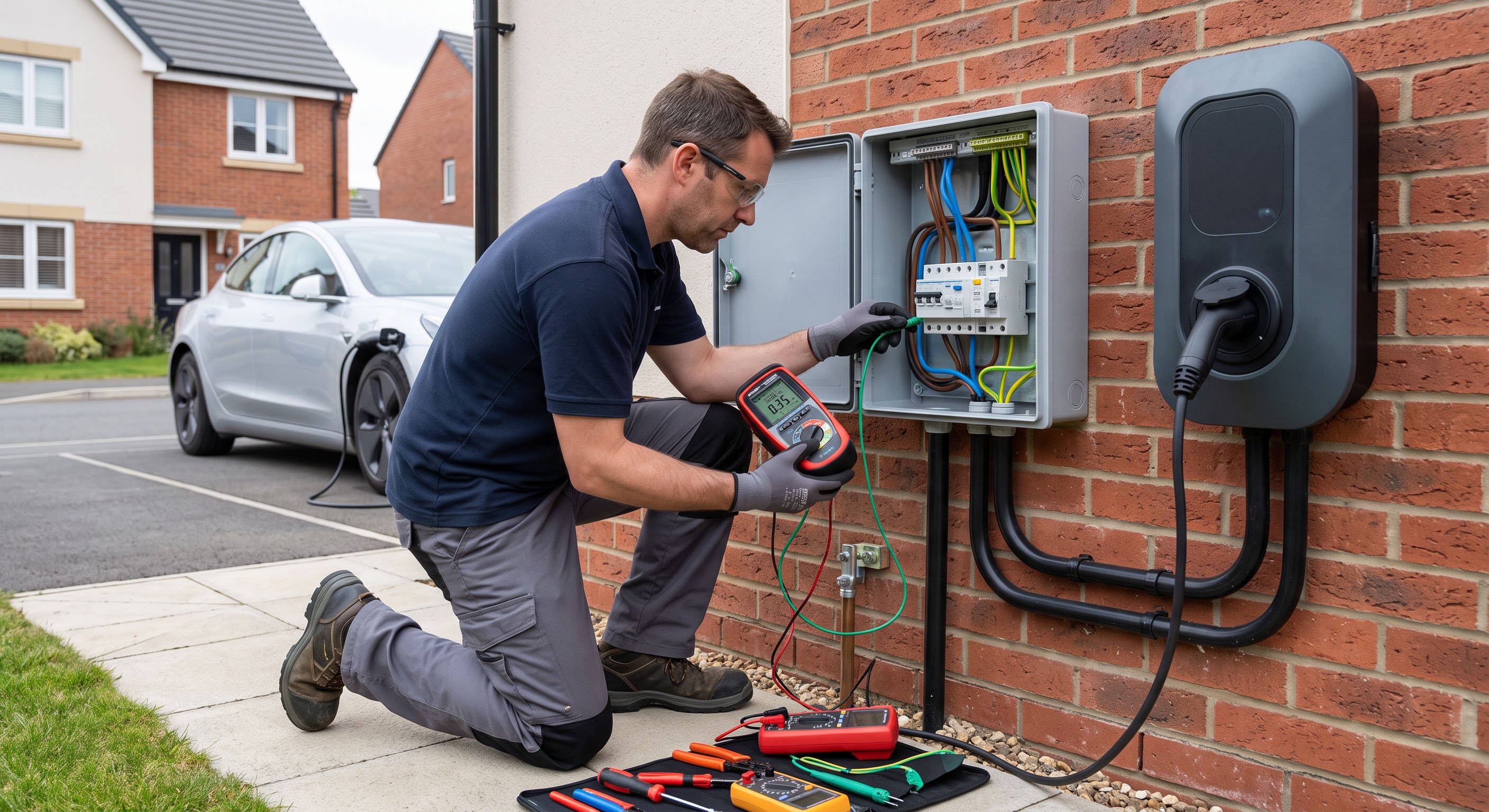
City & Guilds 2921-34 Level 3 Award in the Requirements for the Design and Installation of Domestic and Small Commercial Electric Vehicle Charging Installations
2 Days CourseClassroom
Electricians searching for the City and Guilds 2921-34 qualification are usually already comfortable with installation work and looking for the next specialist step, and the City & Guilds 2921-34 Level 3 Award in the Requirements for the Design and Installation of Domestic and Small Commercial Electric Vehicle Charging Installations is exactly that. Built for those who already hold a strong foundation in electrical installation, this EV charging design course focuses squarely on the standards, technical considerations and design principles behind EV charging equipment and its associated circuits, rather than hands-on installation itself.
Anyone still working to older wiring regulations should look at the City & Guilds 18th Edition 3-Day Course (2382-18) first, since current knowledge of BS 7671 underpins much of what's covered here. Delivered over two days, delegates work through the current IET Code of Practice and relevant sections of BS 7671, building a clearer understanding of different types of electric vehicle supply equipment, charging methods and installation scenarios across domestic and small commercial settings. This Level 3 award in EV charging installation also covers the extra considerations that come with designing EV charging circuits, from earthing and protection arrangements through to labelling, risk assessment and communication with supply authorities.
Successful completion leads to a recognised qualification that supports electricians looking to broaden their service offering to meet growing customer demand, and this domestic EV charging design course sits naturally alongside other technical CPD, including the City & Guilds PAT Testing 2377-77 Course and Solar PV training. It's also a natural next step for anyone who's already completed the City & Guilds (2919-01) EV Charging Point Installation Course (Domestic, Commercial & Industrial) and now wants this EV charging installation design training to build design-level expertise alongside practical installation skills.
Delegates must bring evidence of their qualifications to the training centre; without this, training cannot continue.
Loading Feefo reviews…

In-house training sessions also available
Do you have a larger workforce to train up? Enquire about our in-house training.
Frequently Asked Questions
Is this course suitable for beginners?
No. It's intended for qualified electricians who already hold the required electrotechnical qualifications or recognised ECS/JIB status, designed as an upskilling course rather than an entry-level introduction.
Does this course include practical EV charger installation?
No. It's a theory-based qualification focused on the requirements for design, installation and maintenance of domestic and small commercial EV charging installations, without practical installation or testing exercises.
What do I need to bring to the course?
Evidence of qualifications, basic stationery, a calculator, the IET Code of Practice for Electric Vehicle Charging Equipment Installation, and the 18th Edition Wiring Regulations book. Without proof of entry qualifications, learners may not be able to continue on the course.
Related Courses



Request a callback
Leave your contact details below and we’ll call you back as soon as one of our team becomes available.