.webp)
Find and Book your local courses
City & Guilds 2391-52 Level 3 Award in Initial and Periodic Inspection and Testing of Electrical Installations
7 Days CourseClassroom
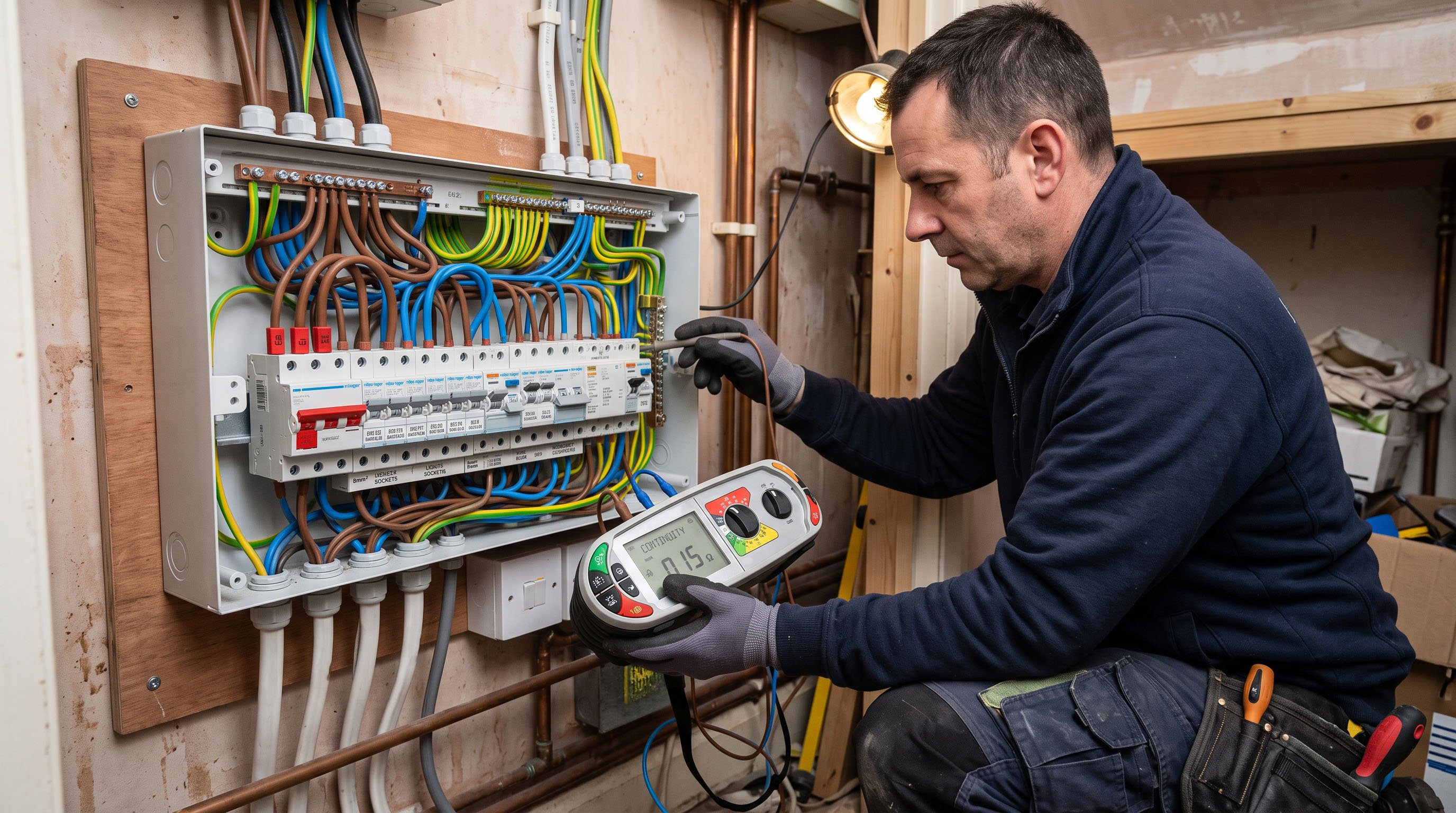
For electricians ready to move beyond day-to-day installation work, the City & Guilds 2391-52 Level 3 Award in Initial and Periodic Inspection and Testing of Electrical Installations is the benchmark qualification that proves genuine competence in inspection and testing, both on site and on paper. Delivered over five classroom-based days, it combines initial verification and periodic inspection and testing within one course, rather than treating them as separate qualifications.
Delegates work through test sequencing, fault finding, certification and the correct application of classification codes, building exactly the kind of detail-level knowledge that separates a competent electrician from a qualified supervisor. It's also worth pairing this alongside other technical CPD; anyone still working from the older regulations should look at the City & Guilds 18th Edition 3-Day Course (2382-18) first, since current wiring regulations knowledge underpins everything covered here.
For many electricians, the 2391-52 is the recognised route toward Qualified Supervisor status under Competent Person Schemes such as NICEIC or NAPIT, giving them the authority to self-certify their own work. Learners who complete the course successfully can progress further still to the City & Guilds Level 4 Award in the Design and Verification of Electrical Installations, opening up senior and specialist roles across the sector. Electricians looking to diversify into newer, growing areas of the trade often combine this qualification with the City & Guilds (2919-01) EV Charging Point Installation Course (Domestic, Commercial & Industrial) or the City & Guilds 2921-34 Level 3 Award in the Requirements for the Design and Installation of Domestic and Small Commercial Electric Vehicle Charging Installations, both of which build naturally on the inspection and testing skills developed here.
Delegates should note that photographic ID, such as a passport or driving licence, must be brought to every assessment session, and depending on the qualification route taken, an online skills scan may be required before enrolment.
Loading Feefo reviews…

In-house training sessions also available
Do you have a larger workforce to train up? Enquire about our in-house training.
Frequently Asked Questions
What are the entry requirements for the City & Guilds 2391-52?
You need to hold a minimum Level 3 electrotechnical qualification, or equivalent, and have at least five years of practical electrical industry experience, including hands-on inspection and testing work. You must also be 18 or over.
Will this qualification help me become a Qualified Supervisor?
Yes, the 2391-52 is widely recognised as a key qualification for electricians working towards Qualified Supervisor status under Competent Person Schemes such as NICEIC and NAPIT, though it's worth checking the specific requirements of your chosen scheme, as additional criteria may apply.
What can I do after completing the City & Guilds 2391-52?
Successful learners can progress to the City & Guilds Level 4 Award in the Design and Verification of Electrical Installations, opening up further senior and specialist roles in the sector.
Related Courses


Request a callback
Leave your contact details below and we’ll call you back as soon as one of our team becomes available.