Find and Book your local courses
The Pros and Cons of In-House Training
For any business or place of work, training is such an essential part of staff development. Without the right education, it's tough for staff to make the adjustment they need to match the performance levels required. As every industry evolves and grows, so too will the demands which are placed on members of staff. For that reason, it's vital that you consider the right kind of training for your business.
One of the most common forms of training is in-house training; when training specialists come to you. There are many benefits to using this kind of service, but also some cons that you would do well to investigate. Let's take a look at what makes in-house training a good idea, and what kind of potential concerns you might have around taking on in-house training. Let's see what suits you best.
In-House Training: The Benefits
- Not only is it easier to organise, but it can be more focused. It allows for you to have the training to be much more specific to your own needs and functions, rather than being taught with more generalised topics that might not touch on what you wanted it to.
- It's easier to organise at short notice and can be cheaper if you have a good number of delegates.
- Also, you can be more relevant with clear work examples. These help to make sure you can get real-life solutions to problems you face in the workplace today. This can be a small but very important difference to the way that your staff work, and can play a critical role in deciding how you work. Training is always more effective when it feels specific to what you are actually doing!
- A considerable benefit of any in-house health and safety training course such as the CITB (Construction Industry Training Board) Site Management Safety Training Scheme (SMSTS course), is that all of your employees come to work as usual, with minimal disruption to the day.
In-House Training: The Challenges
- While you can enjoy a training program from the comfort of your own business, you will need to take on more admin to help cover this. This means making sure you have a training room, a parking spot for the trainer and any equipment that they ask for you to provide if necessary.
- You also have an issue when it comes to motivation. Subconsciously, people tend to feel more comfortable in the workplace environment, and thus they might see the training as less critical if they don't need to be whisked away to take part in it.
- Also, your staff will not get the opportunity to mingle, befriend and network with new people from other businesses. In specific lines of work, that can be quite a thing to miss out on and may reduce the overall scope of education that your staff can enjoy.
Overall, then, you can see why in-house training is something to consider as the benefits are clear, as to are the draw backs. While you might not be 100% certain on what suits your business best right now, you should at least understand that the pros and cons of in-house training can affect any business. Decide wisely, as it can play a major role in business development long-term. Should you decide in-house training is not right for you on this occasion, take some time to find the perfect external classroom course, at a training venue local to you.
Get in touch
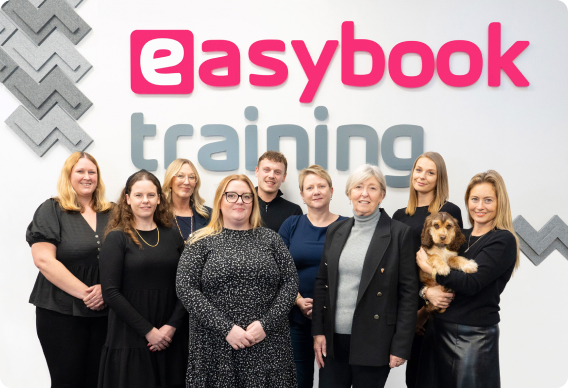
Booking a safety course with Easybook Training couldn't be simpler. We are constantly investing to ensure our online booking system is not only easy to use, but intuitive, so that when you return to book another training course, or add a delegate to an existing booking, this process is as pain free as possible. We're also available seven days a week, and are happy to assist with your enquiry whenever best suits you. As a family-run business we are proud to provide a professional service, with a personal touch; so why not get in touch today.
70,000+ courses
Thousands of courses from hundreds of UK training providers.
UK nationwide
We have venues across the UK, from Aberdeen to Isle of Wight.
No booking fees
We don’t add booking fees, and all major credit cards accepted.
Open 7 days a week
We’re here to help daily, from 8.30am to 7pm.