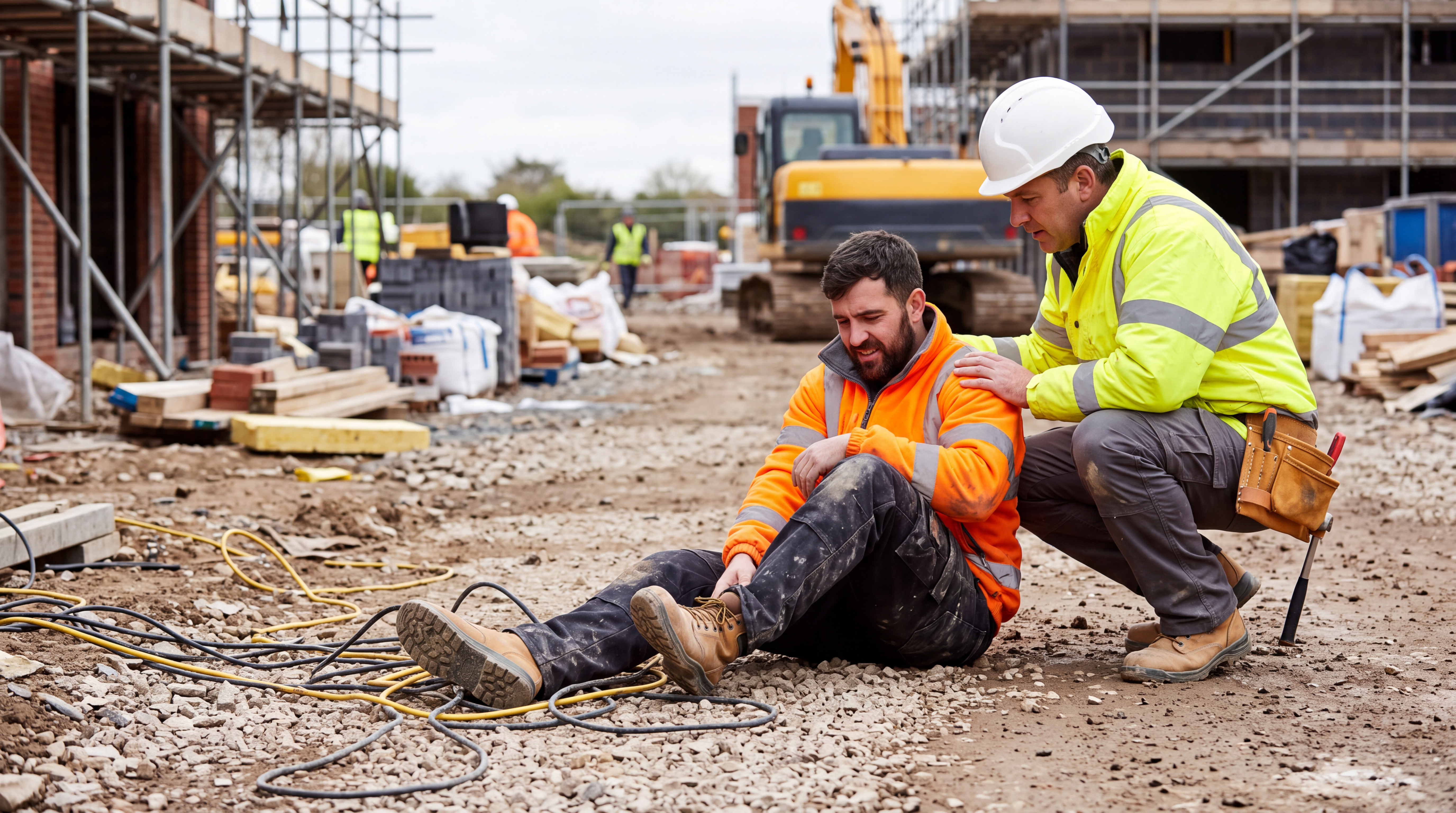
Which First Aid Qualification Does a Construction Site Need?
First Aid at Work or Emergency First Aid at Work, how many first aiders a site needs and when to requalify.
Every construction site needs first aid cover, but the law doesn’t name one qualification for every site. Instead, employers are expected to assess their risks and decide what level of first aid training they need, and how many people should hold it.
For most construction work, the choice is between two courses: the three-day First Aid at Work (FAW) and the one-day Emergency First Aid at Work (EFAW). Construction is treated as a higher-hazard environment, which usually points towards FAW.
This guide explains the difference, what HSE guidance suggests for construction sites, and how to keep certificates current.
FAW and EFAW: The Difference
Emergency First Aid at Work | First Aid at Work | |
|---|---|---|
Duration | 1 day | 3 days |
Covers | Life-threatening emergencies, CPR, bleeding, minor injuries | Everything in EFAW plus fractures, burns, head and spinal injuries and medical conditions |
Valid for | 3 years | 3 years |
How to renew | Retake the one-day course | Two-day FAW Refresher |
What HSE Guidance Suggests for Construction
HSE guidance treats construction as a higher-hazard workplace. As a starting point for the needs assessment, it suggests:
Fewer than 5 workers: at least one appointed person to take charge of first aid arrangements.
5 to 50 workers: at least one first aider trained in EFAW or FAW, depending on the type of injuries that could occur.
More than 50 workers: at least one FAW-trained first aider for every 50 workers.
On construction sites, injuries from falls, plant and tools can be serious, so many employers choose FAW even for smaller teams. Shift patterns, remote work areas and distance from emergency services can also mean more first aiders are needed than the minimum.
What the First Aid at Work Course Covers
The three-day course prepares first aiders to deal with a wide range of injuries and illnesses until the emergency services arrive. Topics typically include:
CPR and use of a defibrillator
Managing an unresponsive casualty and the recovery position
Severe bleeding, shock and burns
Suspected fractures, head and spinal injuries
Common medical conditions such as heart attacks, strokes, seizures and diabetic emergencies
Recording incidents and managing first aid equipment
Each first aider is assessed throughout the course, and successful delegates receive a certificate valid for three years.
When EFAW Is Enough
Emergency First Aid at Work suits lower-risk parts of the operation, such as site offices, or small teams where the needs assessment shows serious injuries are unlikely. It’s also a practical way to add extra cover alongside FAW-trained first aiders.
When FAW Is the Right Choice
First Aid at Work is the right choice for most active construction sites. It prepares first aiders for the injuries most likely on site, including fractures, head injuries and burns. It’s the qualification HSE guidance points to for larger higher-hazard workforces.
Choosing Who to Train
First aiders are most useful when they’re where the work is. On construction sites, that often means training supervisors, foremen or team leaders who are on site every day, rather than office-based staff. Many employers also train more than the minimum to cover holidays, sickness and different shifts.
Where several contractors share a site, the principal contractor usually coordinates first aid cover. It’s still worth agreeing who provides first aiders for each trade, so cover doesn’t depend on one company’s team being on site.
Keeping Certificates Current
Both certificates last three years. FAW first aiders requalify through the two-day First Aid at Work Refresher. This must be completed before the certificate expires, otherwise the full three-day course is needed again. EFAW is renewed by retaking the one-day course. HSE also strongly recommends a short annual refresher to keep skills fresh.
Key Takeaways
Employers decide first aid cover through a needs assessment, not a single required course.
Construction is a higher-hazard workplace, which usually points towards First Aid at Work.
For 5 to 50 workers, HSE suggests at least one EFAW or FAW-trained first aider, and over 50, one FAW-trained first aider per 50 workers.
Both certificates last three years. The FAW Refresher must be taken before expiry.
EFAW works well for lower-risk areas and as extra cover alongside FAW.
Book a First Aid at Work course or browse first aid training at Easybook Training, or call us on 01892 543000 if you’re not sure which course your site needs.