Find and Book your local courses
10 Steps for Implementing an Optimal Health and Safety Strategy
Let’s face it, in the business world, whether you like it or not, health and safety is incredibly important. Some business owners embrace it, while others seem to fight it every step of the way. While it is true that perhaps health and safety has gone a little too far in recent years, as the saying goes ‘better safe than sorry’. Designed to keep employees and the general public safe and sound, health and safety protocols must be adhered to at all times. If you wish to implement optimal health and safety into your place of work, here are ten steps designed to help you do just that.
Emphasise the importance of health and safety at work – One of the struggles when it comes to health and safety in the workplace is getting your employees on board. To them, rather than trying to keep them safe, by implementing strict health and safety rules, you are instead restricting them and making their jobs harder. To ensure you meet little resistance from your employees in regards to your health and safety, make sure you emphasise the importance of the protocols and safety measures you are implementing.
Interact with employees – When implementing health and safety measures into a place of work, it is important that you communicate with the employees working there in the first place. Let them know who you are, explain what health and safety is and why it's put in place, and expanding on what we spoke about previously, make sure you emphasise the importance of health and safety. Talk with people on a one on one basis, get to know them, interact with them, and encourage them to raise any concerns they may have.
Forget about notepads and stationary – When looking into health and safety protocols, as the most resistance you are likely to encounter will come from employees in the workplace, leave the stationary behind. Forget about clipboards, biros, and notepads, as jotting things down when you’re trying to engage with people on a human level is just asking for trouble. They may see you as an outsider looking to spy on them and make their jobs harder than before, so basically try to come across as unofficial as you can.
Show genuine interest in their roles – Employees hard at work, are just everyday people, and because of that, they like being treated as such. Sit down with them, ask them what their job role entails, ask them what they do, and show a genuine interest in their role. This will help you carry out a quick risk assessment as you get a better understanding of what their job role entails.
Find out which specific jobs they do – When getting to know them, as well as finding out their general everyday functions in the company in question, you should also sit down with them and try to find out which specific tasks they do on a daily basis. This helps you understand what goes on at work on a regular basis, plus it again helps you to get a better understanding of what they do, and to try to determine whether there are any safety concerns that you could raise.
Look for the dangers – If you look hard enough, you can find danger in nearly any scenario. When finding out which tasks and jobs employees carry out on a daily basis, you need to then look for the risks associated with these job roles and ask how the employees in question could potentially hurt themselves, or others, while on the job. When speaking with employees, you’ll find that some are more than happy to discuss the dangers and risks with you, while others may think you are paranoid, dramatic, and unnecessarily cautious. No matter how they respond, it is down to you to look for every single possible danger associated with what they do, no matter how unlikely it may be.
Consider how to teach safety to others – If you sit down with an employee who is confident that they won’t get hurt at work, and that they won’t hurt others. Ask them why that is. If they tell you it’s because they know exactly what they’re doing and they know how to operate equipment safely, and how to work safely in general, ask them how they would go about teaching new employees to be safe like them. You could run a hypothetical scenario in which you are a new employee, and they have been tasked with showing you the ropes. Ask them how they would teach you to be safe, and whether they feel it is practical.
Find out what things could be done to make the environment safer – When you consider this next step, it is, of course, important that you are realistic and practical, as there are all kinds of things we can do to make everyday life safer. The problem is that many of these things would not be practical and would be very expensive. If your discussions have raised a few genuine safety concerns, next up you should sit down and try to come up with a solution as to how you would make the workplace safer. Make sure the other individuals in the discussion are indeed on board with you and have accepted the fact that changes could be made, as doing so will help them to work with you, rather than against you.
Work out how to implement the changes – Now that you have hopefully come up with a few ideas and suggestions on what can be done to make the environment safer, you next need to work out how to implement these changes. If workstations are overcrowded for example, you may wish to discuss having fewer individuals in enclosed spaces at once. If there are trip hazards, emphasise the importance of keeping working environments clear and free of clutter at all times. If you think hard enough, you can come up with a solution to any problem, and that is what you need to do here.
Reach a mutual understanding – Once you’ve worked out the potential risks, and what should be done, you should then arrive at an agreement with the business owners and employees alike, in which they agree to make the changes required. To help get them on board, make sure you agree to offer them as much help and assistance along the way as possible, of course health and safety training plays a key part in this process. Remember, work is hard enough at the best of times, so if you can make these changes easier for them, you should. The door swings both ways, so just remember that.
Contact Easybook Training to find out more about how we can make your workplace a safer one with the appropriate Health and Safety training for you and your employees. We have 100's of the leading health and safety courses available to book online or over the phone, held at 1000's of training venues across the UK at competitive prices.
Get in touch
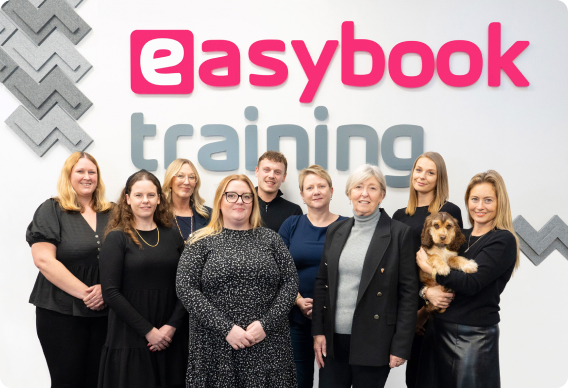
Booking a safety course with Easybook Training couldn't be simpler. We are constantly investing to ensure our online booking system is not only easy to use, but intuitive, so that when you return to book another training course, or add a delegate to an existing booking, this process is as pain free as possible. We're also available seven days a week, and are happy to assist with your enquiry whenever best suits you. As a family-run business we are proud to provide a professional service, with a personal touch; so why not get in touch today.
70,000+ courses
Thousands of courses from hundreds of UK training providers.
UK nationwide
We have venues across the UK, from Aberdeen to Isle of Wight.
No booking fees
We don’t add booking fees, and all major credit cards accepted.
Open 7 days a week
We’re here to help daily, from 8.30am to 7pm.