Find and Book your local courses
First Aid at Work - An Accident Waiting to Happen
What happens if one of your employees has an accident at work? Have you ever had to deal with a first aid at work incident? What if someone falls, has a seizure, cuts themselves badly, faints? Do you know how to deal with such situations? If you don’t, you may be leaving your employees and business at risk.
Under the Health and Safety (First Aid) Regulations 1981, all employers must provide adequate and appropriate equipment to ensure that employees are able to receive immediate attention if they are injured at work, even for the most minor injuries. This law applies to everyone in all workplaces, even the self-employed, however what is considered to be adequate and appropriate will depend on the industry and the workplace conditions.
Low risk workplaces, like offices may not require a qualified first aider, but will need a first aid box. It is the employer’s responsibility to ensure that all first aid needs are met within their organisation. There is no responsibility to provide first aid for non-employees such as the public or even visitors, but the Health and Safety Executive recommends that they are still included in a risk assessment and provision is made for them. It is certainly good business practice to do so.
So if you have made the decision to appoint a first aider, which of your employees would be best for the job? How would you be able to second guess how an employee might react in an emergency or even at the sight of blood? There are several factors you might consider before choosing the first aider for your organisation:
-
Do they have the necessary attributes and enthusiasm to absorb the knowledge and skills. Depending on the industry you work within, there are various injuries which they may have to deal with before calling emergency services. Your first aider should be able to retain the knowledge to deal with almost any situation.
-
A calm disposition is also useful. If someone is injured, then your first aider will need to act quickly and remain calm. Any panic may mean that the injured party panics and the situation escalates. Shock is a particular problem in such situations.
-
Finally, you should also consider the workload of your first aider. Are they in a role that will allow them the necessary time to train or carry out their first aid duties? If not, you may need to consider someone else for the role.
The First Aid at Work course is run over three days and involves at least eighteen hours of workplace training. The course teaches delegates how to deal with a first aid incident, as well as how to resuscitate and control bleeding.
Naturally, one might hope that a serious accident might never occur in the workplace, however statistics tell us that accidents are all too common. Our First Aid at Work course will give your chosen first aider the confidence to deal with a wide range of first aid emergencies and will ensure that you don’t leave your employees or your business exposed.
Get in touch
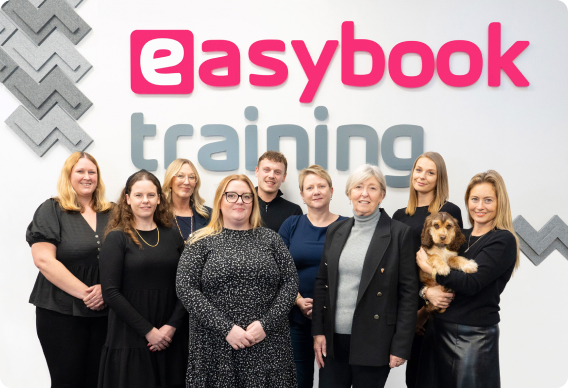
Booking a safety course with Easybook Training couldn't be simpler. We are constantly investing to ensure our online booking system is not only easy to use, but intuitive, so that when you return to book another training course, or add a delegate to an existing booking, this process is as pain free as possible. We're also available seven days a week, and are happy to assist with your enquiry whenever best suits you. As a family-run business we are proud to provide a professional service, with a personal touch; so why not get in touch today.
70,000+ courses
Thousands of courses from hundreds of UK training providers.
UK nationwide
We have venues across the UK, from Aberdeen to Isle of Wight.
No booking fees
We don’t add booking fees, and all major credit cards accepted.
Open 7 days a week
We’re here to help daily, from 8.30am to 7pm.