Find and Book your local courses
IPAF or PASMA: Choosing the Right Working at Height Training
If you work at height on construction sites, choosing the right training is one of the most important decisions you will make. Getting it wrong does not just affect compliance. It affects your safety and the safety of your workforce.
Two of the most widely recognised working at height qualifications in the UK are IPAF (International Powered Access Federation) and PASMA (Prefabricated Access Suppliers' and Manufacturers' Association). While both relate to working at height, they cover completely different types of equipment.
The key distinction is simple: IPAF is for powered access platforms (MEWPs) such as cherry pickers and scissor lifts. PASMA covers mobile access towers built from prefabricated sections.
Choosing the wrong qualification means your training may not be recognised on site, and you may not be legally permitted to operate the equipment you need.
This guide explains how to identify which qualification applies to your role, your equipment and your work environment.
Why Getting This Decision Right Matters
Working at height is consistently one of the leading causes of serious injury and fatality on UK construction sites. The Work at Height Regulations 2005 place a legal duty on employers and workers to ensure that anyone working at height is appropriately trained and competent.
The practical consequences of choosing the wrong qualification include:
• Being denied site access if your certification does not match the equipment in use
• Increased risk of serious injury through operating equipment without proper training
• Employer liability if an incident occurs and training is found to be inadequate
• Wasted time and money by having to repeat training with the correct qualification
The Core Difference: Equipment Type
The simplest way to determine which qualification you need is to look at the type of equipment you will be operating or supervising.
Factor | IPAF | PASMA |
Equipment type | Powered access: cherry pickers, scissor lifts, boom lifts, MEWPs | Mobile aluminium scaffold towers |
Power source | Motorised / powered | Non-powered, manually assembled |
Primary risk | Overturning, entrapment, collision | Incorrect assembly, instability, overloading |
Who needs it | Operators and supervisors of MEWPs | Anyone who assembles, alters, dismantles or supervises mobile towers |
Duration | Complete 2 or 3 categories in 1 day | Typically 1 day |
Card issued | PAL Card (Powered Access Licence) | PASMA card |
Renewal | Every 5 years | Every 5 years |
IPAF Training: What It Covers and Who Needs It
IPAF training is the internationally recognised standard for anyone who operates Mobile Elevating Work Platforms (MEWPs). In the UK, employers across construction, maintenance, events, utilities and logistics require IPAF certification as a condition of operating this type of equipment.
What IPAF Training Covers
• Legislation and regulations relating to working at height and MEWP operation
• Types of MEWPs and their specific risks and limitations
• Pre-use inspection and daily checks
• Safe operation, including travelling, positioning and working in the platform
• Emergency procedures and rescue planning
• Practical assessment on the specific equipment category
IPAF Categories Explained
IPAF training is split into categories depending on the type of equipment:
Category | Equipment Type | Typical Use |
1a | Scissor lifts (static vertical) | Indoor maintenance, warehousing |
1b | Boom lifts (static, articulated/telescopic) | High-level access, maintenance |
3a | Scissor lifts (mobile, travelling at height) | Construction, civil engineering |
3b | Boom lifts (mobile, travelling at height) | Construction, utilities, outdoor access |
Most construction site roles requiring MEWP operation will need Category 3a and/or 3b. If you are unsure which applies to your equipment, check the machine's classification before booking training.
Who Needs IPAF Training
• Operators of cherry pickers, boom lifts and scissor lifts
• Site supervisors responsible for MEWP operations
• Anyone who directs others in the use of powered access equipment
• Workers in construction, facilities management, utilities and events
PASMA Training: What It Covers and Who Needs It
PASMA training is the industry standard for anyone who works with mobile aluminium scaffold towers. Unlike powered access equipment, mobile towers are assembled manually on site. Incorrect assembly is one of the leading causes of tower-related incidents.
PASMA certification demonstrates that a person can safely assemble, alter, dismantle and inspect a mobile access tower in accordance with current regulations and manufacturer guidance.
What PASMA Training Covers
• Work at Height Regulations 2005 and how they apply to mobile towers
• Types of mobile access towers and their components
• Industry Codes of Practice for tower assembly
• Safe assembly, alteration and dismantling of mobile towers
• Pre-use inspections and identifying faults
• Safe working practices at height on a tower platform
• Rescue and emergency procedures
Who Needs PASMA Training
• Anyone who assembles or dismantles mobile scaffold towers on site
• Workers who alter or reposition towers during use
• Supervisors responsible for tower operations
• Contractors working in construction, maintenance, retail fit-out and facilities management
Step 1: Identify Your Equipment
The quickest way to determine which qualification you need is to identify the type of equipment you will be working with.
If you work with this equipment | You need this training |
Single truck-mounted booms | IPAF 1b |
Cherry picker, boom lift, articulated MEWP | IPAF 3b |
Scissor lift, vertical MEWP | IPAF 3a (or 1a if static only) |
Mobile aluminium scaffold tower | PASMA |
Both MEWPs and mobile towers | IPAF and PASMA |
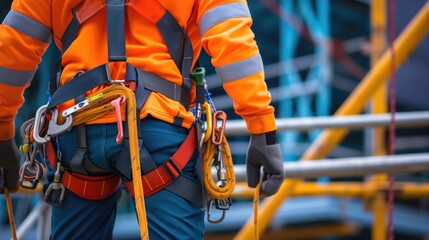
Harness and rope access equipment | Separate specialist training required |
Step 2: Consider Your Role and Responsibilities
Both IPAF and PASMA qualifications are required by operators, but supervisors also have responsibilities under the Work at Height Regulations. If you are responsible for overseeing others who use this equipment, you must have sufficient competence to do so. This typically means holding the relevant qualification yourself.
Role | IPAF Required? | PASMA Required? |
MEWP operator | Yes — relevant category | No (unless also using towers) |
MEWP supervisor | Yes — recommended | No (unless also using towers) |
Tower assembler / dismantler | No (unless also using MEWPs) | Yes |
Tower supervisor | No (unless also using MEWPs) | Yes — recommended |
Site manager | Depends on site equipment | Depends on site equipment |
Do You Need Both Qualifications?
On many construction sites, both powered access equipment and mobile scaffold towers are in use. If your role requires you to operate or supervise both types of equipment, you will need both IPAF and PASMA certification.
Holding both qualifications also increases your flexibility as a worker. Contractors and employers often prioritise candidates who can demonstrate competence across multiple types of access equipment, particularly on larger or more complex projects.
What Employers and Site Managers Expect
UK construction employers and principal contractors routinely require proof of IPAF or PASMA certification before allowing workers to operate the relevant equipment on site. This requirement extends to subcontractors and self-employed workers.
From a compliance perspective:
• The Work at Height Regulations 2005 require employers to ensure workers are competent
• Many principal contractors include IPAF and PASMA as mandatory requirements in their pre-qualification questionnaires
• Insurers may challenge claims where an operator was not appropriately certified
• Site induction processes increasingly check certification as a condition of access
Practical Scenario Examples
Scenario 1
You are a construction worker asked to operate a cherry picker to access roof-level steel. You need IPAF Category 3b.
Scenario 2
You are a maintenance contractor asked to build a mobile tower to access suspended ceilings in a commercial building. You need PASMA.
Scenario 3
You are a site supervisor responsible for both cherry picker operations and mobile tower assembly across a large construction project. You need both IPAF and PASMA.
Frequently Asked Questions
Is IPAF a legal requirement?
IPAF is not a specific legal requirement under UK law, but the Work at Height Regulations 2005 require workers to be competent. IPAF is widely accepted by employers and regulators as evidence of competence for MEWP operation.
Is PASMA the same as a scaffold licence?
No. PASMA covers mobile aluminium access towers only. Scaffolding requires separate training and licensing through CISRS (Construction Industry Scaffolders Record Scheme).
Can I do IPAF and PASMA in the same week?
Yes. Both are typically one-day courses and can be completed consecutively.
Do IPAF and PASMA cards expire?
Yes. Both cards are valid for five years. You will need to complete refresher training before the card expires to maintain your certification.
Can I do IPAF or PASMA online?
The theory element of some courses can be completed online, but the practical assessment — which is a mandatory part of both qualifications — must be completed in person.
Conclusion
The decision between IPAF and PASMA comes down to one thing: the equipment you use.
• Operating powered access equipment such as cherry pickers or scissor lifts requires IPAF
• Assembling or working on mobile aluminium scaffold towers requires PASMA
• If your role involves both types of equipment, you need both qualifications
Getting the right training in place protects you legally, demonstrates competence to employers and contractors, and keeps you and your team safe when working at height.
Get in touch
Booking a safety course with Easybook Training couldn't be simpler. We are constantly investing to ensure our online booking system is not only easy to use, but intuitive, so that when you return to book another training course, or add a delegate to an existing booking, this process is as pain free as possible. We're also available seven days a week, and are happy to assist with your enquiry whenever best suits you. As a family-run business we are proud to provide a professional service, with a personal touch; so why not get in touch today.
70,000+ courses
Thousands of courses from hundreds of UK training providers.
UK nationwide
We have venues across the UK, from Aberdeen to Isle of Wight.
No booking fees
We don’t add booking fees, and all major credit cards accepted.
Open 7 days a week
We’re here to help daily, from 8.30am to 7pm.