
Find and Book your local courses
Why Specialist Training Is Increasing in Modern Construction
Construction specialist training is growing in demand as sites become more technically complex and roles that once fell under general labour now require distinct, accredited competence of their own.
This shift isn't a passing trend, it reflects genuine changes in how modern construction projects are planned, resourced and delivered.
For businesses used to relying on flexible, broadly skilled labour, the move toward specialisation can feel like a loss of operational flexibility. In practice, it's better understood as a redistribution of risk, complex tasks are increasingly handled by people specifically trained and certified for them, rather than by whoever happens to be available on the day.
This guide explores what's driving the shift toward specialisation, which areas are seeing the strongest growth, and what it means for both workers and employers planning their training investment.
Defining Specialist Training Versus General Competence
It's worth being precise about the distinction. General site competence, covered by qualifications like the CITB Health and Safety Awareness course, gives every worker a baseline understanding of hazards and safe working practice applicable across almost any site.
Specialist training goes further, certifying competence in a specific, often higher-risk discipline, such as operating a particular category of plant, coordinating temporary works, or working safely in a confined space. The two are not interchangeable, and increasingly, sites expect both rather than one or the other.
More Complex Sites, More Specialist Roles
Modern construction projects increasingly rely on specialist plant, temporary works and technical installations that demand focused training rather than general site competence alone.
A generation ago, a broadly experienced site operative might reasonably be expected to turn their hand to several different tasks. Today, the technical demands of modern plant, modular construction methods and increasingly stringent safety documentation mean specialisation is often the more realistic, and safer, path.
Regulatory Pressure Driving Specialisation
Tightening regulation across working at height, plant operation and temporary works has raised the bar for what counts as adequately trained, pushing more roles toward formal, specialist qualification.
The Temporary Works Regulations and updated Work at Height Regulations guidance, for example, have both increased the level of documented competence expected from anyone responsible for these areas, well beyond what general site experience alone can demonstrate.
The Skills Gap Behind the Shift
An ageing workforce and a well-documented construction skills shortage mean fewer experienced generalists are available, increasing reliance on targeted specialist training to fill capability gaps quickly.
Specialist Area | Driving Factor |
Plant operation (CPCS/NPORS) | Increasingly mechanised sites |
Working at height (IPAF/PASMA) | Tighter regulation and enforcement |
Temporary works coordination | Greater complexity in structural sequencing |
Engineering construction (ECITB CCNSG) | Specialist safety requirements on energy and industrial sites |
Confined space entry | Increased scrutiny following high-profile incidents |
How Specialisation Is Changing Career Paths
Where career progression once ran largely through general site experience toward supervisory and management roles, an increasing number of workers are instead building careers around a specific technical discipline, becoming the go-to specialist in temporary works, confined space, or specialist plant across multiple employers.
This has its own advantages: specialists with recognised, in-demand certifications often command better rates and more consistent work, since fewer people hold the qualification relative to demand.
For workers early in their career, this creates a genuine choice between two viable paths, broad progression toward site management, or deep specialisation in a technical discipline. Neither is inherently superior, but understanding the distinction helps in choosing which qualifications to prioritise early on.
How Businesses Are Responding
Larger contractors are increasingly building specialist training into structured career pathways for their own staff, rather than relying purely on the external labour market to supply specialist skills as needed. This reduces dependency on subcontractors for recurring specialist tasks and gives ambitious staff a visible route into higher-value roles without needing to leave the business.
What This Means for Training Providers and Workers
For workers, specialist certification increasingly opens doors to higher-value roles and better site access. For employers, investing early in specialist training pathways reduces the risk of being caught short on complex projects.
Planning Specialist Training Investment
For employers, the practical challenge is deciding which specialist areas to invest in ahead of need, rather than reactively once a project already requires them. A useful starting point is reviewing the specialist requirements across upcoming tender opportunities and live projects, then identifying where the business currently relies on subcontractors or agency staff to cover a specialist gap.
Building even a small in-house pool of specialist-certified staff in those areas reduces both cost and scheduling risk on future projects, while also giving ambitious workers a clear route toward higher-value, better-paid specialist roles.
Common Mistakes to Avoid
Assuming general site experience is sufficient for increasingly regulated specialist tasks
Waiting until a project requires a specialist skill before starting the training pathway
Underestimating how quickly specialist regulation and guidance can change
Failing to build specialist training into long-term workforce planning
Key Takeaways
Sites are becoming more technically complex, increasing demand for distinct specialist roles
Regulation is raising the bar for what counts as adequately trained across several disciplines
A shrinking pool of experienced generalists is increasing reliance on targeted specialist training
Specialist certification opens higher-value roles for workers and reduces project risk for employers
Career paths are shifting from general progression toward recognised technical specialisation
Frequently Asked Questions
What counts as specialist training in construction?
Specialist training covers roles and equipment beyond general site competence, including plant operation, temporary works, working at height and other technically demanding disciplines requiring dedicated certification.
Why is specialist training becoming more important?
Increasing site complexity, tighter regulation and a shrinking pool of experienced generalists are all driving demand for workers with focused, accredited specialist skills.
Does specialist training replace general site induction?
No, specialist training sits alongside general site induction and safety training, it doesn't replace the baseline competence every worker needs before starting on site.
Which specialist qualifications are currently in highest demand?
Plant operator certifications such as CPCS and NPORS, along with working at height qualifications like IPAF and PASMA, are currently among the most sought after given the scale of the construction skills shortage.
Is it worth becoming a specialist rather than a generalist in construction?
For many workers, yes, specialists with recognised, in-demand certifications often see better rates and more consistent work, since fewer people hold the relevant qualification relative to project demand.
Conclusion
As sites grow more technically demanding, specialist training is shifting from a nice-to-have to a genuine competitive requirement, for individuals and employers alike.
Browse specialist plant, height and safety training at Easybook Training.
Get in touch
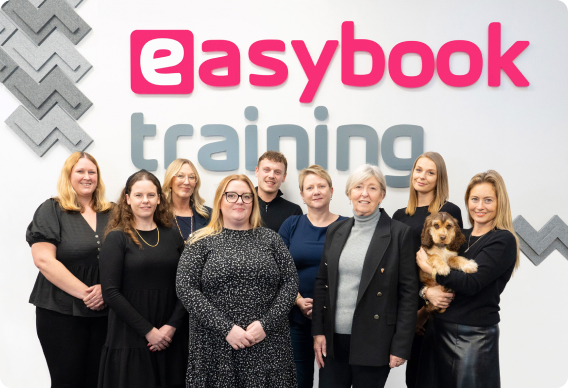
Booking a safety course with Easybook Training couldn't be simpler. We are constantly investing to ensure our online booking system is not only easy to use, but intuitive, so that when you return to book another training course, or add a delegate to an existing booking, this process is as pain free as possible. We're also available seven days a week, and are happy to assist with your enquiry whenever best suits you. As a family-run business we are proud to provide a professional service, with a personal touch; so why not get in touch today.
70,000+ courses
Thousands of courses from hundreds of UK training providers.
UK nationwide
We have venues across the UK, from Aberdeen to Isle of Wight.
No booking fees
We don’t add booking fees, and all major credit cards accepted.
Open 7 days a week
We’re here to help daily, from 8.30am to 7pm.